
DAILY MEDITATION: 'There will be more joy in heaven over one sinner who repents'
Liturgical day: Thursday of the Thirty-first Week in Ordinary Time
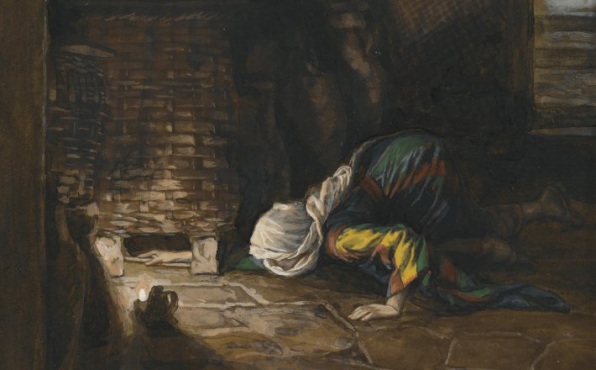 Gospel text (Lk 15,1-10): The tax collectors and sinners were all drawing near to listen to Jesus, but the Pharisees and scribes began to complain, saying, “This man welcomes sinners and eats with them.” So Jesus addressed this parable to them. “What man among you having a hundred sheep and losing one of them would not leave the ninety-nine in the desert and go after the lost one until he finds it? And when he does find it, he sets it on his shoulders with great joy and, upon his arrival home, he calls together his friends and neighbors and says to them, ‘Rejoice with me because I have found my lost sheep.’ I tell you, in just the same way there will be more joy in heaven over one sinner who repents than over ninety-nine righteous people who have no need of repentance.
“Or what woman having ten coins and losing one would not light a lamp and sweep the house, searching carefully until she finds it? And when she does find it, she calls together her friends and neighbors and says to them, ‘Rejoice with me because I have found the coin that I lost.’ In just the same way, I tell you, there will be rejoicing among the angels of God over one sinner who repents.”
'There will be more joy in heaven over one sinner who repents'
Fr. Francesc NICOLAU i Pous
(Barcelona, Spain)
Today, the evangelist of God's mercy imparts two parables of Jesus that lighten up his divine behavior towards those sinners returning to the right path. With the human image of joy, he reveals God's goodness finding pleasure in the homecoming of those who moved away from sin. It is like coming back to the Father's home (as more distinctly will be said at Lk 15,11-32). “For God did not send his Son into the world to condemn the world, but that the world might be saved through him” (Jn 3, 17), and He did it while welcoming those that, full of confidence, “were all drawing near to listen to Jesus” (Lk 15, 1), as He healed their soul as the doctor heals the body of the ailing (cf. Mt 9, 12). While the Pharisees believed they were so righteous and felt they needed no doctor, it is actually for them —the evangelist says— that Jesus proposes the parables we read today.
If we feel spiritually sick, Jesus will tend to us and will be happy that we have gone to him. But if, on the contrary, we would think, as those proud Pharisees did, that we need not to plead forgiveness, the divine Doctor will not heal us. Each time we recite the Lord's Prayer, we must feel like sinners, as we say “and forgive us our trespasses...” And we sure must be grateful to him for doing it! As grateful we must also be, for having placed, so mercifully, at our disposal, the Sacrament of Reconciliation. Let us hope our haughtiness will not make us to look down on it. St. Augustine tells us that Jesus Christ, God and Man, gives us an example of humbleness by removing the “tumor” of our arrogance, “for, though great is the misery of a haughty man, greater still is the mercy of the humble God.”
Let us further add that the lesson Jesus gives to the Pharisees is also an example for all of us; we cannot throw sinners away from us. The Lord wants us to love them as He has loved us (cf. Jn 13, 34) and we must rejoice to bring back home the lost sheep or to recover the lost coin.
Source: evangeli.net