
Confucianism
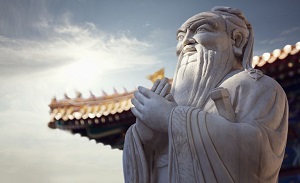
The Life and Philosophies of Confucius
<p><span style='font-size:12px'><span style='font-family:arial,helvetica,sans-serif'>Confucius (551-479 B.C.), the founder of the philosophy known as Confucianism, was a Chinese sage and teacher who spent his life concerned with practical moral values. </span></span></p>
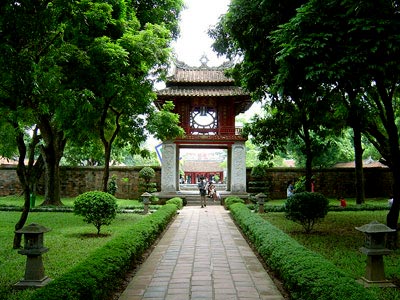
Confucianism in Vietnam
<p style='text-align:justify'><span style='font-family:arial,helvetica,sans-serif'><span style='font-size:12px'>The profound impact of Confucianism remains strong in Vietnam. Social order is defined by its principles, and the rituals or deference and obedience are still observed. </span></span></p>

The Ethics of Confucius - Chapter 2 (part 3)- Self-Control
'A flaw in a mace of white jade may be ground away, but a word spoken amiss cannot be mended.' This is expatiated upon by the sage as follows: 'Hear much and put aside the points of which you are in doubt, while you speak cautiously at the same time of...

The Ethics of Confucius - Chapter 2 (part 2): Fortitude
Here are yet other words of penetrating wisdom concerning the advantages of this perfect poise and calm: 'He who does not anticipate attempts to deceive him nor think beforehand of his not being believed, and yet apprehends these things readily when they occur, is he not a man of superior...
The Ethics of Confucius - Chapter 2 (part 1): Self-development
Confucius puts it: 'If the will be set on virtue,there will be no practice of wickedness.' (Analects, bk. iv., c. iv.) True; for when the will rests upon set purpose, based upon purified desire, born of knowledge and discriminating investigation of phenomena, nothing can...

The Ethics of Confucius - Chapter 1 (part 7) - Rectified Purpose
'Do not be desirous of having things done quickly. Do not look at small advantages. Desire to have things done quickly prevents their being done thoroughly. Looking at small advantages prevents great affairs from being accomplished.' (Analects, bk. xiii., c. xvii.)
The Ethics of Confucius - Chapter 1 (part 6)
'Their thoughts being sincere, their purposes were rectified.' In this age, when comfort is the sole god of the many, who also deem themselves good and virtuous and even superior, surely these truths need to be held before ...

The Ethics of Confucius - Chapter 1 (part 5)
It is characteristic of Confucius that, where he did not know, he did not affirm. His saying, 'When you do not know a thing, to acknowledge that you do not know it, is knowledge '
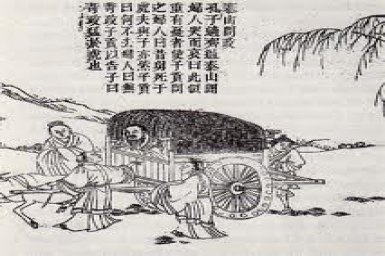
The Ethics of Confucius: Chapter 1 (part 4)
'Learning without thought is labour lost; thought without learning is perilous.' (Analects, bk. ii., c. xv.)
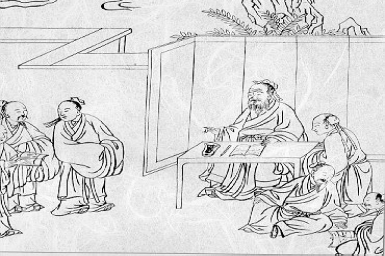
The Ethics of Confucius: Chapter 1 (part 3)
.'When you know a thing, to hold that you know it, and when you do not know a thing, to acknowledge that you do not know it—this is knowledge.'
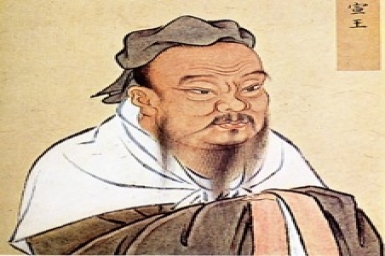
The Ethics of Confucius - Chapter 1 (part 2): The Art of Living
' The practice of right-living is deemed the highest, the practice of any other art lower. Complete virtue takes first place; the doing of anything else whatsoever is subordinate.'
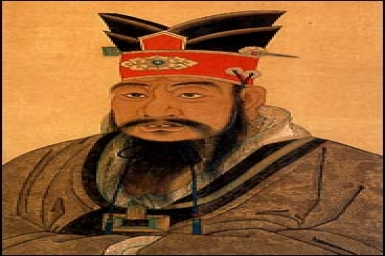
The Ethics of Confucius: Chapter I (part 1)
The central idea of Confucius is that every normal human being cherishes the aspiration to become a superior man—superior to his fellows, if possible, but surely superior to his own past and present self. This does not more than hint at perfection as a goal; and it is said of him that one of the subjects concerning which the Master rarely spoke, was 'perfect virtue.'

Understanding Ceremony and Ritual in Confucianism
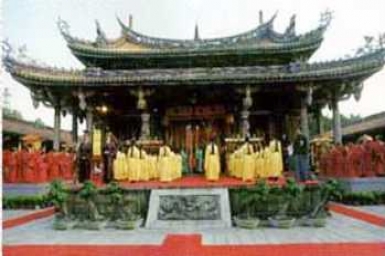
Ceremony and ritual are concepts in Confucianism that are at the center of any discussion of its moral code. The columnist in the Cultural of Life column in the Peace Weekly introduces us to the Confucian view of life. The aspect of ritual or ceremony so intimately connected with Confucianism has a relationship with society that we may tend to disregard and see only ceremony and ritual.

Confucianism in Vietnam
The influence of Confucianism on Vietnam was tenacious because it was rooted in the country's educational system until the 20th century. (Education consisted of a study of the Confucian classics and ethics.)
What is Confucianism?
Confucianism, the philosophical system founded on the teaching of Confucius (551–479 B.C.), dominated the sociopolitical life of China for most of that country's history and largely influenced the cultures of Korea, Japan, and Indochina.