
Côte d'Ivoire: Muslim and Christian communities observe the start Ramadan and Lent together
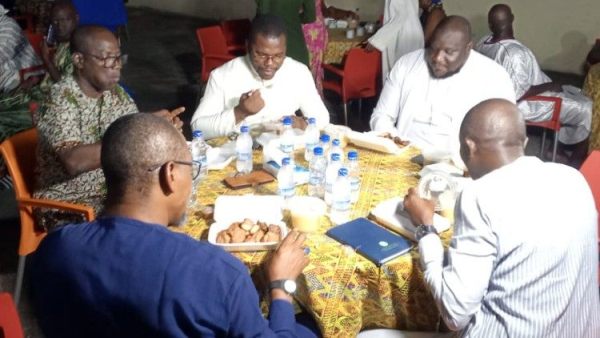 Muslim and Catholic communities began the period of Ramadan and Lent simultaneously on Wednesday, 18 February. At the Sacred Heart Parish in Abobo Anador, within the Archdiocese of Abidjan, this spiritual coincidence was marked early Wednesday evening by a collective breaking of the fast in an atmosphere of fraternity, reflection, and conviviality. Prayers were offered for peace, unity, and social cohesion in Côte d’Ivoire.
Catholics and Muslims in Abidjan share a meal after a day of fasting
The coincidence of Muslim Ramadan and Christian Lent carries a symbolic, powerful, and special significance. Thirty days of asceticism for Muslims, forty for Christians—two distinct spiritual paths but following the same perspective: almsgiving, prayer, and penitence as ways of inner conversion and fraternal solidarity.
At the Sacred Heart Parish in Abobo Anador, this convergence led to a joint prayer followed by a collective breaking of the fast, a tangible sign of a shared life together, consciously celebrated.
Renewed call for unity in diversity
According to Father Gilles César Dogoua, parish priest and national executive secretary of the Episcopal Commission for Ecumenism, Biblical Apostolate, and Interreligious Dialogue, this coincidence, which 'does not happen every year,' provides a privileged opportunity to strengthen bonds of fraternity.
Father Gilles believes this simultaneity urges religious authorities to take on greater responsibility: to foster meeting spaces to reinforce community ties. 'Unity is not only about spiritual life; it must encompass the entire human family. We are children of the same God who desires us to walk hand in hand, cultivating what unites us for genuine cohesion—serving our country where faith remains a widely shared value,' he emphasised, adding: 'There is deep joy in being united in diversity.'
A concrete witness of living together
In a sociopolitical context sometimes marked by tensions, 'the fact that these two significant periods begin together is an implicit message from God. It calls us to be artisans of peace and unity and to jointly carve the paths toward a reconciled nation,' said Father Gilles
At the invitation of the parish priest, Muslim faithful responded in great numbers. Traoré Mahama, executive secretary of the management committee of the Al Moubârack Mosque in Abobo Anador, expressed deep sentiments of appreciation and hailed this 'unprecedented' initiative: gathering in the courtyard of a parish, hearing the call to prayer, and breaking the fast together—all of which speaks volumes about this approach.' For him, this encounter strengthens intercommunity ties and allows religions to 'speak with one voice—the language of coexistence, peace, and social cohesion,' shared principles across all religious traditions.
Marcel Ariston BLÉ - Abidjan
Source: vaticannews.va/en