
DAILY MEDITATION: ““Behold, I have prepared my banquet... and everything is ready; come to the feast”
Liturgical day: Thursday of the Twentieth Week in Ordinary Time
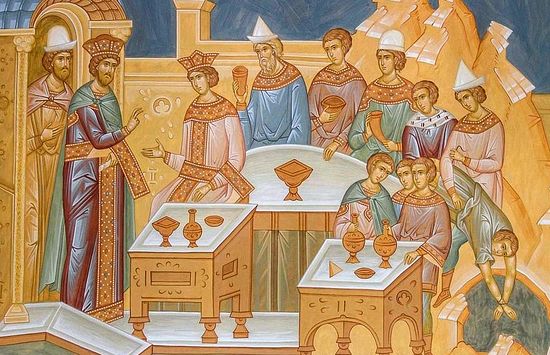 Gospel text (Mt 22,1-14): Jesus again in reply spoke to the chief priests and the elders of the people in parables saying, “The Kingdom of heaven may be likened to a king who gave a wedding feast for his son. He dispatched his servants to summon the invited guests to the feast, but they refused to come. A second time he sent other servants, saying, ‘Tell those invited: “Behold, I have prepared my banquet, my calves and fattened cattle are killed, and everything is ready; come to the feast.”’ Some ignored the invitation and went away, one to his farm, another to his business. The rest laid hold of his servants, mistreated them, and killed them. The king was enraged and sent his troops, destroyed those murderers, and burned their city.
Then the king said to his servants, ‘The feast is ready, but those who were invited were not worthy to come. Go out, therefore, into the main roads and invite to the feast whomever you find.’ The servants went out into the streets and gathered all they found, bad and good alike, and the hall was filled with guests. But when the king came in to meet the guests he saw a man there not dressed in a wedding garment. He said to him, ‘My friend, how is it that you came in here without a wedding garment?’ But he was reduced to silence. Then the king said to his attendants, ‘Bind his hands and feet, and cast him into the darkness outside, where there will be wailing and grinding of teeth.’ Many are invited, but few are chosen.”
“Behold, I have prepared my banquet, my calves and fattened cattle are killed, and everything is ready; come to the feast”
Fr. David AMADO i Fernández
(Barcelona, Spain)
Today, Jesus’ parable speaks of the banquet of the Kingdom, a recurrent example in his preaching. Specifically, this story has to do with that wedding feast that will be celebrated at the end of time, when the union of Jesus with his Church will be eternal. She is Christ's spouse, who walks in our world, and will finally espouse her Beloved forever and ever. God the Father has prepared that feast and He wants all people to be present. This is why He invites all of us to “come to the feast!” (Mt 22, 4).
However, the parable has a tragic development, as many “ignored the invitation and went away, one to his farm, another to his business” (Mt 22, 5). This is why, every day, God's mercy is, more often than not, addressed to the most distant people. It is like a groom who is about to get married and invites his family and friends, but they do not go. In view of that, he decides to call his acquaintances and co-workers, but they come up with excuses; finally, he invites the first people he meets, because he has prepared a banquet and he wants to have guests at his table. Something very similar happens with God.
But the different characters appearing in the parable may also be images of the different states of our soul. Thanks to the grace of baptism we are God's friends and inheritors along with Christ: we have a place reserved for us in this banquet. If, however, we forget our calling as sons and daughters, God proceeds to treat us as mere acquaintances while still maintaining his invitation. If we let the grace within us die, we simply become people at the crossroads, just passers-by, without a penny in matters of the Kingdom. Yet, God keeps on calling us.
His call may reach us any time. It is by personal invitation. Nobody has any right to be there. It is God who finds us and says: “Come to the wedding feast!” And we have to respond to this invitation with words and actions. This is why that guest who was not properly dressed was thrown out: “My friend, how is it that you came in here without a wedding garment?” (Mt 22, 12).
Source: evangeli.net