
DAILY MEDITATION: “Master, it is good that we are here; let us make three tents”
Liturgical day: August 6th: Feast of the Transfiguration of the Lord (C)
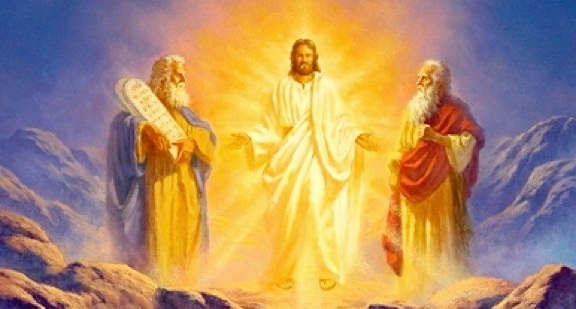 Gospel text (Lk 9,28b-36): Jesus took Peter, John, and James and went up a mountain to pray. While he was praying his face changed in appearance and his clothing became dazzling white. And behold, two men were conversing with him, Moses and Elijah, who appeared in glory and spoke of his exodus that he was going to accomplish in Jerusalem. Peter and his companions had been overcome by sleep, but becoming fully awake, they saw his glory and the two men standing with him. As they were about to part from him, Peter said to Jesus, “Master, it is good that we are here; let us make three tents, one for you, one for Moses, and one for Elijah.” But he did not know what he was saying. While he was still speaking, a cloud came and cast a shadow over them, and they became frightened when they entered the cloud. Then from the cloud came a voice that said, “This is my chosen Son; listen to him.” After the voice had spoken, Jesus was found alone. They fell silent and did not at that time tell anyone what they had seen.
“Master, it is good that we are here; let us make three tents”
Fr. Antoni CAROL i Hostench
(Sant Cugat del Vallès, Barcelona, Spain)
Today, while pondering over the Transfiguration, we can sense man situation in Heaven. What interest us the most is to consider the spontaneous reaction of those 'earthly partners' of that scene. Once again, is Simon Peter who takes the floor: 'Master, it is good that we are here' (Lk 9, 33). It is wonderful to see that, only by looking at the body of Christ in a glorious mood, Peter feels fully happy: he does not miss anything else.
'Let us make three tents, one for you, one for Moses, and one for Elijah.” Peter’s reaction shows the truest dynamism of love: he thinks no more of his own comfort; he wants to save that level of deep joy by seeking the good of others —in this case, taking it in a very human way: making a shelter!. It is the clearest manifestation of true love: I am happy because I make you happy; I am happy by offering me to your happiness.
Besides, the fact that Simon intuitively recognizes Moses and Elijah is very revealing. Peter, logically, knew about them, but had never seen them (they had lived centuries earlier!) but, instead, he identifies them immediately, as if he had always known them. Here is a sample of the high degree of knowledge of man in Heaven: when looking at God 'face to face', man will experience an unimaginable expansion of his knowledge —a much more profound participation in the Truth. Saint John Paul II said: “‘divinization’ in the other world will bring to the human spirit “such a range of experience of truth and love such as man would never have been able to attain in earthly life.”
Finally, when Simon sees Moses and Elijah, he not only accepts them instantly, but also loves them immediately —he thinks of putting up a tent for each one of them; Saint Peter, the first Pope of the Church and also a fisherman, expresses his love in a simple way. Saint Teresa, nun and Doctor of the Church, expressed the logic of love in a profound way: “the contentment of pleasing the other exceeds my own contentment.”
Source: evangeli.net