
Indonesian Church strengthens fight against human trafficking
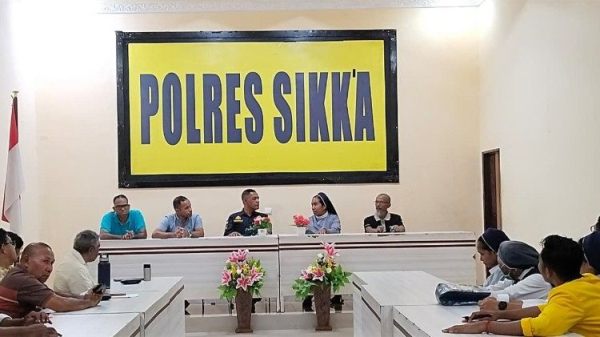 Following the rescue of 13 young women in Flores, the Church in Indonesia is doubling down in its efforts to combat human trafficking.
The Church in Indonesia is doubling down on the fight against human trafficking
The Catholic Church in Flores, eastern Indonesia, has intensified its efforts to combat human trafficking following the rescue of 13 young women who allegedly suffered exploitation at a nightclub in Sikka Regency.
The women, aged 17 to 26 and originally from West Java, sought protection in January 2026 after reportedly enduring physical violence, sexual exploitation, and serious labor abuse. They are now receiving shelter and assistance at a safe house operated by Tim Relawan untuk Kemanusiaan Flores (TRUK-F), a humanitarian network supported by the Society of the Divine Word (SVD) and the Missionary Sisters Servants of the Holy Spirit (SSpS).
At the shelter, the women are accompanied psychologically and pastorally, while also receiving legal assistance as their case moves forward through the judicial process.
Public call for accountability
The case has sparked widespread concern in East Nusa Tenggara Province. On 9 February, the Sikka Human Rights Network (Jaringan HAM Sikka), in which TRUK-F plays a central role, organized a peaceful demonstration at the local legislative council (DPRD) in Maumere.
Priests, religious sisters, seminarians, and lay human rights advocates called for a thorough investigation and firm legal action concerning alleged abuses at a nightclub.
Church representatives emphasized that their action was not directed at one establishment alone, but aimed at ensuring broader protection for vulnerable workers and preventing similar incidents. They urged authorities to strengthen oversight of entertainment venues and enforce existing anti-trafficking laws more effectively.
A troubling pattern
Sister Fransiska Imakulata, SSpS, Director of TRUK-F, noted that the organization has been assisting victims of human trafficking since 2000. She described the recent case as part of a recurring pattern.
In 2021, 17 minors from West Java were allegedly exploited in entertainment venues in Sikka. In 2024, eight men from Maumere were reportedly trafficked to East Kalimantan to work on palm oil plantations; one of them died. The current case remains under legal investigation.
“The most common method is the promise of high salaries, free accommodation, and decent employment,” Sister Imakulata explained. Young women are often recruited with offers to work as singers in nightlife venues, while others are enticed by agents promising stable employment outside Flores.
She stressed that women and children remain especially vulnerable, particularly those with limited education and economic opportunity. However, men are also at risk when poverty drives them to migrate for work. “When a male victim dies or suffers serious harm, the consequences are borne by his entire family,” she said.
Laws and challenges
Indonesia has enacted Law No. 21 of 2007 on the Eradication of the Criminal Act of Trafficking in Persons, along with regional regulations intended to prevent trafficking and protect victims. Yet Sister Imakulata observed that implementation remains inconsistent.
“Victims are not always treated with dignity. At times, they are even stigmatized,” she said, pointing to the limited availability of government shelters and insufficient monitoring of workplaces where exploitation may occur.
Beyond providing safe accommodation, TRUK-F offers legal advocacy, trauma counseling, repatriation assistance, educational support, and economic empowerment programs. The network also conducts awareness campaigns and workshops to strengthen community vigilance and promote respect for the rights of women and children.
“In those who suffer, we see the face of Christ,” Sister Imakulata said. She encouraged citizens to report suspected trafficking cases, emphasizing that national law guarantees protection and confidentiality for those who come forward.
A pastoral mission
For Father Otto Gusti Ndegong Madung, SVD, Rector of the Institut Filsafat dan Teknologi Kreatif Ledalero and a member of TRUK-F, the Church’s commitment to combating human trafficking is rooted in its pastoral identity.
“Human trafficking is a crime against humanity that continues to affect Flores,” he said. Many local residents are recruited to work on plantations in other regions of Indonesia and abroad, while individuals from other provinces have also become victims in Flores.
“As a Church deeply rooted in the life of the people, we cannot remain indifferent,” Father Madung said. “The Church is called to be a sign and instrument of God’s liberating love, helping to build a society that respects human dignity and justice.”
He identified structural factors contributing to trafficking, including poverty, corruption, weak law enforcement, and limited social transformation. He reaffirmed that the Church’s preferential option for the poor is an essential and non-negotiable dimension of its mission.
Hope and prevention
Amid ongoing economic hardship and high levels of labor migration, the Church in Flores is encouraging young people to pursue safe and legal employment pathways. Catholic institutions, including the Ledalero Institute, are expanding academic programs designed to equip students with practical skills and a stronger awareness of their rights.
“We want our young people to work wherever they choose,” Father Madung said, “but with dignity, protection, and proper safeguards.”
For the Church in Flores, the fight against human trafficking is not merely a social initiative. It is a concrete expression of the Gospel’s call to defend human life and dignity, standing beside the vulnerable and affirming that every person is created in the image and likeness of God.
Fr. Kasmir Nema
Source: vaticannews.va/en