
Lebanon’s Catholic Patriarchs and Bishops call for peace
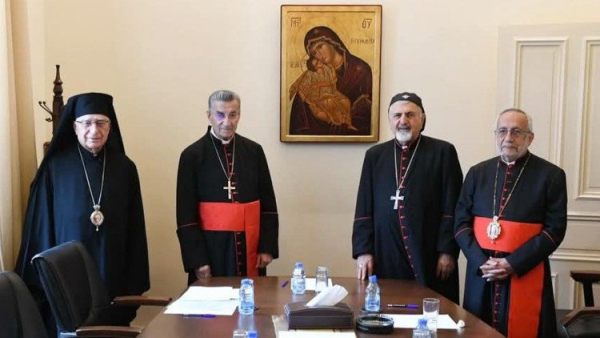 Amid ongoing violence in the Middle East, the Assembly of Catholic Patriarchs and Bishops in Lebanon releases a statement warning that escalation threatens human dignity and calling for dialogue, national unity, and renewed international efforts for peace.
The Assembly of Catholic Patriarchs and Bishops from Lebanon
As violence escalates in Lebanon and across the Middle East, the Assembly of Catholic Patriarchs and Bishops in Lebanon has issued a strong appeal, expressing “deep concern over the current situation and over the risk that the region may slide into wider confrontations with grave consequences for its peoples.”
The statement, issued on the fifth of March, focuses especially on the innocent victims, the displacement of families, and the worsening hardship endured by civilians as the conflicts continue to intensify.
Reflecting on the moral dimension of the crisis, the Bishops warn that “the continuation of this spiral of violence threatens the dignity of the human person, which is a gift from God, and undermines the foundations of justice and stability.'
The Bishops go on to quote Pope Leo when he said, “Violence is never the right choice, and we must always choose the good.” With this clear moral call, the bishops insist that “peace is not a secondary or temporary option, but a human duty and a collective responsibility.”
For this reason, they call “for an immediate halt to the spiral of violence and a return to constructive dialogue and responsible diplomatic action,” grounded in the pursuit of the common good and the desire of peoples to live in justice and dignity.
Describing Lebanon as “the land of message and coexistence,' the Bishops also address the country’s political authorities, calling on “those in authority to assume their full national responsibilities.” They go on to urge leaders to safeguard internal unity and strengthen civil peace.
At the same time, they encourage all communities and political actors to support the Lebanese state and its institutions, particularly regarding the principle that weapons must remain under the authority of the state. This, they say, is essential “in order to preserve state sovereignty, reinforce national stability, and avoid tampering with the destiny of the nation.”
Turning then to address the international community, the Assembly calls on global institutions to intensify efforts aimed at preventing further escalation and seeking just solutions. They stress that any lasting peace must be built on justice and respect for the dignity and the rights of all peoples.
The Bishops go on to address “our faithful sons and daughters and all people of goodwill,' urging solidarity with those who continue to endure the hardships of conflict.
They ask communities to extend assistance to “their brothers and sisters who remain steadfast in their villages,” and urge them to persevere in fervent prayer for peace in Lebanon and the Middle East, and for the safety of innocent civilians, and “so that leaders may choose the path of dialogue instead of destruction and pursue the common good rather than the tragedy of wars.”
In their statements, the bishops and patriarchs renew their call to welcome displaced civilians, reminding Christians that hospitality towards those forced to flee their homes is rooted in the Gospel itself. “I was a stranger and you welcomed me,' write the bishops, quoting Jesus in the Gospel of Matthew.
Bringing their statement to a close, the bishops entrusted Lebanon, the Middle East, and the whole world to Divine Providence, praying that God may grant a troubled world the gift of reconciliation and lasting peace.
Vatican News
Source: vaticannews.va/en