
Mozart’s Requiem resounds in Rome with Warsaw Chamber Opera
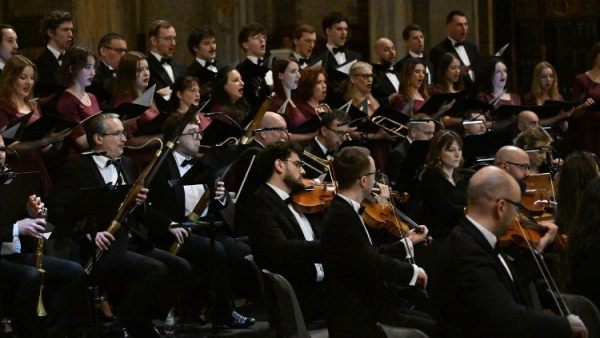 Mozart’s Requiem in D minor echo through the Basilica of Saint Mary Major, in a performance by the Choir and Orchestra of the Warsaw Chamber Opera. Stripped of excessive interpretative weight, the work emerges with renewed clarity, revealing the natural humanity of a masterpiece that meditates on life, death, and hope.
Concert of the ‘Requiem’
Mozart’s Requiem in D minor echoed through the Papal Basilica of Saint Mary Major on Thursday evening, in a performance by the Choir and Orchestra of the Warsaw Chamber Opera.
Staged during Lent, the performance carried symbolic weight. Lent is traditionally a time for reflecting on human fragility. Presenting Mozart’s final composition in one of Christianity’s most significant basilicas highlighted the work’s universality and underscored the spiritual bond between the Polish people and the Roman liturgical tradition.
A return to the essence of Mozart’s music
Under the baton of Adam Banaszak, the ensemble offered an interpretation focused on the work9;s essence. The use of period instruments helped restore the sound world of Wolfgang Amadeus Mozart, underscoring the intimate, contemplative nature of the composition. Rather than a monumental relic of music history, the Requiem appeared as a living work—direct, human, and profoundly expressive.
The story behind the Requiem
Few works rival the Requiem’s legendary status. Its dramatic journey began in 1791, when Franz von Walsegg commissioned Mozart to honor his late wife. Already fatigued from composing The Magic Flute and La clemenza di Tito, Mozart worked feverishly but died on 5 December 1791 at age 35, leaving it unfinished. His student Franz Xaver Süssmayr completed the piece from Mozart’s sketches.
Soloists, choir, and institutional support
The performance brought together a balanced and expressive vocal quartet: soprano Aleksandra Olczyk, mezzo-soprano Joanna Motulewicz, tenor Adrian Domarecki, and bass Artur Janda. Joined by choir and orchestra, they gave voice to what is often seen as Mozart’s spiritual testament—music that continues to transcend time and speak directly to contemporary audiences.
The event was supported by the Embassy of Poland to the Holy See, led by Ambassador Adam Kwiatkowski, along with Adam Struzik, President of Mazovia, and Alicja Węgorzewska-Whiskerd, director of the Warsaw Chamber Opera. The concert was held in collaboration with cardinal Rolandas Makrickas, archpriest of the Papal Basilica of Saint Mary Major.
Marco Di Battista
Source: vaticannews.va/en