
A faith that unites: A youth festival in the Holy Land
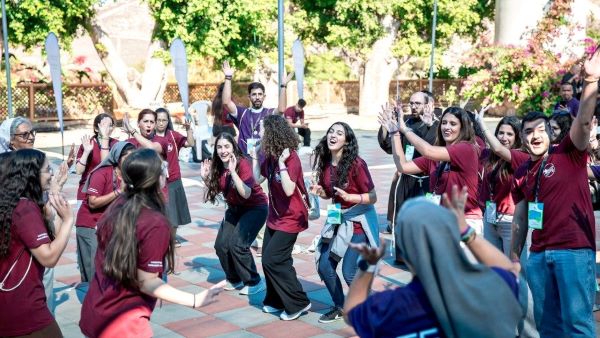 More than 300 young Catholics, both Hebrew- and Arabic-speaking, gathered over the weekend to celebrate hope and unity at an event organized by the St James Vicariate – a community of Hebrew-speaking Catholics belonging to the Latin Patriarchate of Jerusalem.
Participants at the Youth Festival in the Holy Land
At the heart of a land marked by deep divisions and suffering, young people from the St James Vicariate – a community of Hebrew-speaking Catholics belonging to the Latin Patriarchate of Jerusalem – gathered over the weekend with young people from other parishes across the Holy Land for their annual festival.
More than an ordinary gathering, it was an event offering a profound spiritual experience and an opportunity to rediscover the true meaning of being one Church, beyond all divisions.
Beyond the wounds
Reflecting on the deeper meaning of this journey, Father Piotr Żelazko, Patriarchal Vicar for Hebrew-speaking Catholics in Israel, draws attention to the wounds and difficulties that mark the daily lives and hearts of young people in the Holy Land. In this reality, no one is spared suffering.
“The illnesses affecting our society, the wounds and the conflict really change us. Why do I say ‘us’? Because, although I am a foreigner, I have been living here for almost 20 years and feel part of this society. I call Israel ‘my home’, but I, too, am not immune to these wounds,” Father Żelazko emphasizes.
Helping young people
This experience of pain leaves a deep mark on young people, who carry complicated personal stories and an enormous emotional burden. The vicar explains that every young person bears “wounds inflicted by wars, suffering and each person's individual experiences – all the burdens they carry in their hearts”.
Young people are “a little more resilient, a little more innocent”, the priest says. However, he warns “it is precisely their wounds that will begin to speak.”
In a society increasingly marked by loneliness and constant fear – where “each new day brings a life filled with fear” – wounds and grief can drown out the voices of young people, overshadowing their desire for reconciliation and fraternity, which they continue to carry in their hearts despite all the difficulties. Yet putting this desire into practice is far from easy, because society does little to help young people overcome their fear and pain.
True faith means unity
In the face of such deep divisions and widespread suffering, Father Żelazko recalls the words Cardinal Pierbattista Pizzaballa, Latin Patriarch of Jerusalem, once addressed to young people: “Remember that if you continue doing these beautiful things, there will be people who do not accept them and will not support what you are doing.”
In this context, the need for a faith lived out in its deepest and most radical simplicity becomes particularly urgent.
“We must be clear about one thing: as Christians and Catholics, despite all our differences, we are united in Christ. That is how it must be! If Jesus does not unite us, then our faith is not authentic!”
Praying in Arabic and Hebrew
The journey towards unity has its roots in the Youth Festival, which came about quite spontaneously. After a forced interruption due to the conflict, the decision to resume the event was accompanied by a remarkable coincidence, as Father Żelazko recounts:
“Last year, we decided to organize the festival despite the war with Iran. We did not make that decision because we had anticipated or knew anything about what was going to happen. But then, in fact, a ceasefire came. Such coincidences also give rise to hope and strengthen our commitment. We dream that it is possible, we prepare ourselves and organize everything, and then, when the ceasefire came, we said: ‘All right, let's organize our festival. Everything is ready!’”
What makes the event truly special, however, is its ability to bring together Hebrew- and Arabic-speaking Catholic communities.
The vicar points out that it may be “the only day on which Hebrew-speaking and Arabic-speaking Catholics come together, and perhaps also the only place in the world where we pray in Arabic and Hebrew at the same time”.
Program and activities
The Youth Festival, attended by more than 300 people, included moments of communal prayer, workshops and a shared meal.
For Father Żelazko, the event remains a guiding light throughout the pastoral year: “My first hope is that the festival will continue without interruption, year after year. Secondly, I hope that one day it will become a more international event, welcoming young people from other countries too, so that we can be together not just for one day a year!”
Emiliano Eusepi
Source: vaticannews.va/en