
Judaism
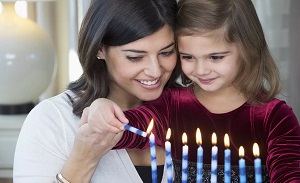
A Guide to the Reform Branch of Judaism
<h2><span style='font-size:14px'><span style='font-family:arial,helvetica,sans-serif'>The Reform Approach to Jewish Tradition</span></span></h2>
Hebrew Names for Girls and Their Meanings
<p style='text-align:justify'><span style='font-family:arial,helvetica,sans-serif'><span style='font-size:14px'>Naming a new baby can be an exciting if daunting task. Choosing a traditional Hebrew name for your daughter can foster a strong, warm connection to tradition, and girls' names in Hebrew also reflect many wonderful meanings.</span></span></p>
.jpg)
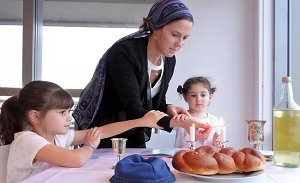
Blessing the Children on Shabbat
<p style='text-align:justify'><span style='font-family:arial,helvetica,sans-serif'>Every week as the sun sets on Friday evening the Jewish holiday of Shabbat begins. </span></p>
Brit Milah
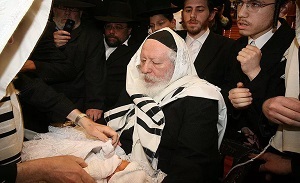
<p style='text-align:justify'><span style='font-family:arial,helvetica,sans-serif'><span style='font-size:14px'>Brit milah, which means 'covenant of circumcision,' is a Jewish ritual performed on a baby boy eight days after he is born. </span></span></p>
Passover Observance in Israel and the Diaspora
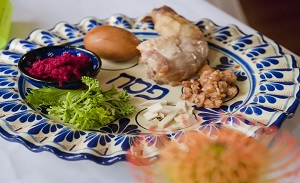
<p style='text-align:justify'><span style='font-family:arial,helvetica,sans-serif'>Passover (also called Pesach, פֶּסַח) is one of the most central holidays in Judaism, and it is celebrated each year in the spring beginning on the 15th day of the Hebrew month of Nissan.</span></p>
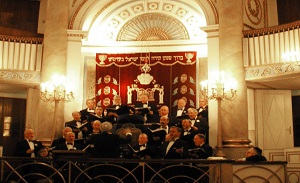
What or Who Is a Cantor?
<p style='text-align:justify'><span style='font-family:arial,helvetica,sans-serif'>Although most well-known around the Jewish High Holidays, the cantor<em> </em>in Judaism is often present throughout the year in the synagogue. </span></p>
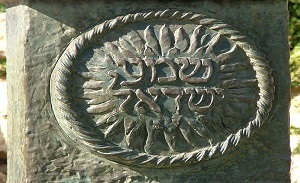
What is the Shema?
<p style='text-align:justify'><span style='font-family:arial,helvetica,sans-serif'>One of the most well-known prayers in Judaism is the <em>shema</em>, a blessing that finds its place throughout the daily prayer service and well into the evening hours at bedtime. </span></p>
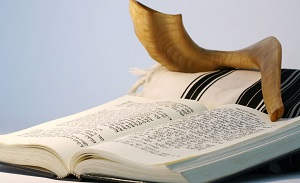
Rosh Hashanah Prayers and Torah Readings Prayer Services for the Jewish New Year
<p style='text-align:justify'><span style='font-family:arial,helvetica,sans-serif'>The machzor is the special prayer book used on Rosh Hashanah to lead worshippers through the special Rosh Hashanah prayer service. The main themes of the prayer service are repentance by man and judgment by God, Our King.</span></p>
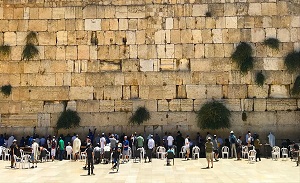
The Western Wall: A Quick History
<p style='text-align:justify'><span style='font-size:12px'><span style='font-family:arial,helvetica,sans-serif'>The First Temple was destroyed in 586 BCE, and the Second Temple was finalized in 516 BCE. It wasn't until King Herod decided in the 1st century BCE to expand the Temple Mount that the Western Wall, also called the Kotel, was built.</span></span></p>
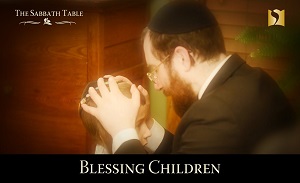
Blessing the Children on Shabbat
<p style='text-align:justify'><span style='font-family:arial,helvetica,sans-serif'><span style='font-size:12px'>Every week as the sun sets on Friday evening the Jewish holiday of Shabbat begins. This day of rest lasts until Havdalah is said as the sun sets on Saturday and is dedicated to family, community and spiritual renewal.</span></span></p>
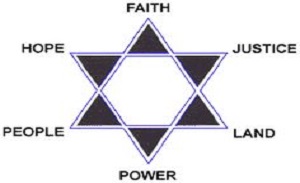
What Is the Star of David in Judaism? The Significance of the Six-Pointed Star
<p style='text-align:justify'><span style='font-family:arial,helvetica,sans-serif'><span style='font-size:12px'>The Star of David is a six-pointed star made up of two equilateral triangles superimposed over each other. It also is known as a hexagram. In Hebrew, it is called the <em>magen David </em>(מָגֵן דָּוִד), which means the 'shield of David.'</span></span></p>
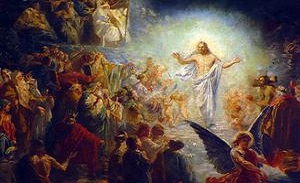
Does Judaism Believe in an Afterlife?
<p style='text-align:justify'><span style='font-family:arial,helvetica,sans-serif'><span style='font-size:12px'>Many faiths have definitive teachings about the afterlife. But in answer to the question 'What happens after we die?' the Torah, the most important religious text for Jews, is surprisingly silent. Nowhere does it discuss the afterlife in detail. </span></span></p>
What Does It Mean For Jews to Be the Chosen People?
<p style='text-align:justify'><span style='font-family:arial,helvetica,sans-serif'><span style='font-size:12px'>According to Jewish belief, Jews are the Chosen People because they were chosen to make the idea of one God known to the world.</span></span></p>
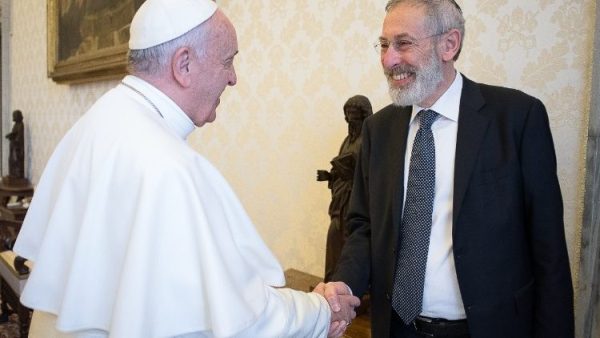
Pope and Rome Rabbi exchange greetings
<p style='text-align:justify'><span style='font-family:arial,helvetica,sans-serif'><span style='font-size:12px'>Pope Francis and the Chief Rabbi of Rome have exchanged greetings on the occasion of the Jewish feast of Pesach, or Passover, that starts on the evening of Wednesday and continues till the evening of April 16, this year.</span></span></p>
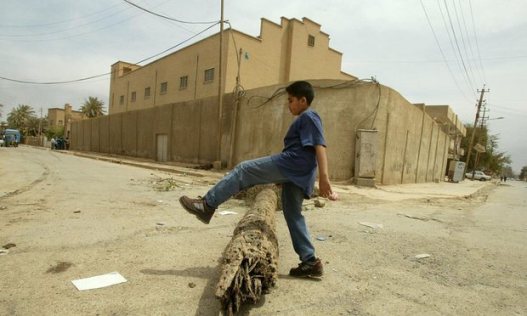
History of Iraqi Jews is warning to Christians
<p style='text-align: justify;'><span style='font-size:12px;'><span style='font-family: arial,helvetica,sans-serif;'>Jews accounted for one-third of Baghdad’s population by the time of the first world war. Now the community is all but extinct...</span></span></p>
“There is no despair in the world at all!”
<p style='text-align: justify;'><span style='font-size:12px;'><span style='font-family: arial,helvetica,sans-serif;'>“There is no despair in the world at all!” Every month, the Nation of Israel sanctifies the moon. This means that at least once a month, we form a deep bond with our Father in Heaven, the King of Kings.</span></span></p>
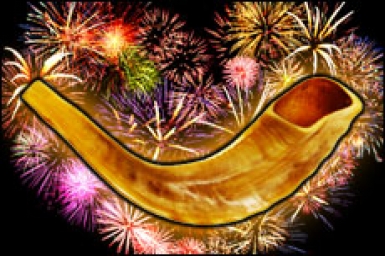
ROSH HASHANAH 2014
Rosh Hashanah, the Jewish New Year, falls on the Hebrew calendar dates of 1 and 2 Tishrei. Here are the coinciding secular dates for the upcoming years
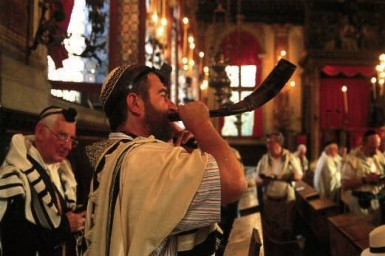
Rosh Hashana, la nouvelle année juive
Les 5 et 6 septembre, les Juifs ont célébré Rosh Hashana, soit le début de la 5774e année selon le calendrier hébreu.
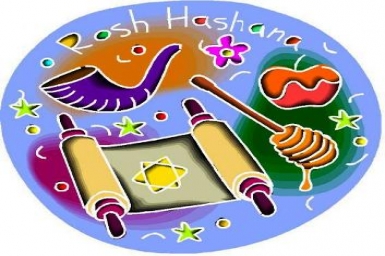
The 8 most important things to know about Rosh HaShanah
Rosh Hashanah marks the beginning of the Ten Days of Awe, during which Jews reflect upon their actions over the past year and seek forgiveness for their transgressions in hopes of influencing God's final judgment.
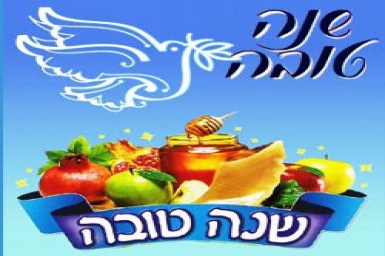
Fête de Roch hachana / Rosh Hashana (Judaisme)
L'expression Roch hachana signifie 'tête de l'année', 1er jour de l'an, C'est le 1er Tichri. Rosh-Hashana est le Nouvel An Juif. Bien que selon la Torah, l'année commence en Nissan (le mois de Pessah, la tradition a fixé ce jour comme le premier de la nouvelle année.
Art not for art's sake, but to the glory of God
The aesthetic sense in Judaism reflects a healthy skepticism about appearances, even while it advocates beauty and purity.