
Living Tradition and popular piety reveal face of God close to humanity
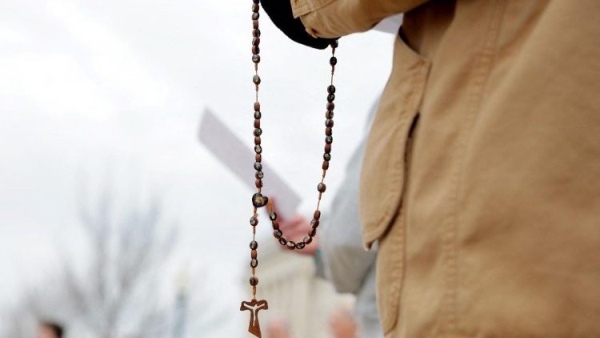 Our Editorial Director reflects on Pope Leo XIV’s address to the International Theological Commission and his catechesis at the Wednesday General Audience, saying both express an incarnate faith that also emerges from the pages of the late Pope Francis’ personal diary.
(2026 Getty Images)
The two addresses which Pope Leo XIV delivered on Wednesday, November 25, are linked. His catechesis at the Wednesday General Audience offers a concrete example of what he set out in his address to the International Theological Commission.
The Pope indicated which themes the Commission, established within the Dicastery for the Doctrine of the Faith, should explore in greater theological depth in the years ahead.
Both are significant because they go to the heart of debate within the Church. The first concerns Tradition or, more precisely, “holy Tradition,” which is “always living,” the Successor of Peter explains, since “our understanding of this reality deepens continuously and coherently.”
To affirm this is to recognize a development of principles without implying “a rupture” in the teaching of the Magisterium. Each generation faces circumstances different from those of its predecessors. The faith and what flows from it are challenged to take flesh in new contexts.
Our understanding of the Gospel itself deepens, and from this comes a development of the principles of the Magisterium. In this regard, Pope Leo cites such issues as war, slavery, and the death penalty. The words of the encyclical Magnifica humanitas are significant here in reaffirming the move beyond the theory of “just war.”
Shortly afterward, speaking to the pilgrims at the General Audience, the Pope delivered a catechesis on peace that was almost a decalogue.
He recalled that peace springs from the cross of Christ and said there is no room for resignation, as though violence were inevitable. He noted that the Council had updated the Church’s teaching on this point.
He stressed that new conflicts are increasingly inhumane and devastating, and that we cannot remain indifferent. He explained the need to break the ideological and economic chains that enslave people to war, and he condemned the arms race. Unfortunately, many governments today present that race as unavoidable and fail to reflect on the real risk of humanity destroying itself.
Finally, he called on Christians to commit themselves and “work on the front lines” in building peace and defending human dignity.
This is a Magisterium that engages with the challenges humanity faces today. It shows the face of an incarnate faith, of a God close to the events of human life.
This very closeness lies behind the second theme Pope Leo XIV asked the International Theological Commission to study in depth: the cultural forms through which the faith is transmitted.
The inculturation of faith, the Bishop of Rome recalled, is “an indispensable dimension” of bearing witness to it from generation to generation. Pope Leo’s recent Apostolic Journey to Latin America offered a very concrete example of this.
There, he witnessed a living faith, animated by traditions and popular piety, a faith that speaks the language of grandparents and parents, and is bound up with moments, feasts, celebrations, shrines, and devotions.
The missionary Pope’s addresses and personal witness made clear how much these things had meant to him personally as a form of evangelization.
Ultimately, it is this simple and profound faith that emerges from the pages of the late Pope Francis’ private diary, in the book edited by Cardinal Victor Manuel Fernández and published in Italian by the Vatican Publishing House (LEV) and in English by Penguin Random House in the US and the UK.
While the first reactions understandably focused on some visions of the devil that the Argentine Pope wrote of having experienced, the most significant and unifying feature of those pages is his total abandonment into the arms of God. This abandonment finds expression in gestures, devotions, and the prayer of the Rosary.
Here, too, we see the face of a God who is close, near at hand, present, a God with whom we can speak and wrestle. We can smile at Him and sense His smile in return.
Andrea Tornielli
Source: vaticannews.va/en