
Secularization and the reflected light of little Bethlehem
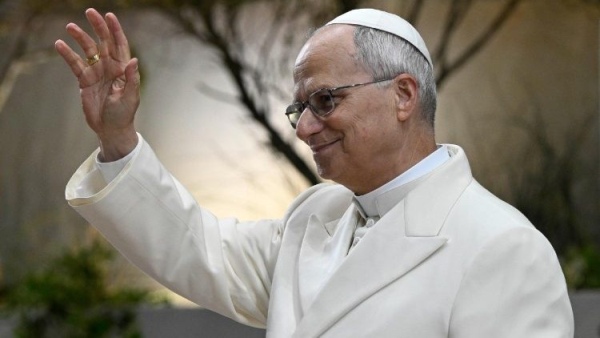 Our Editorial Director, Andrea Tornielli, reflects on Pope Leo XIV's address to young people in Uruguay, in which the Pope sets out the task facing Christians in every corner of the world.
Pope Leo XIV at prayer vigil in Uruguay (VATICAN MEDIA)
It was an address that, on a cold and windy evening, warmed the hearts of the 70,000 young people who had gathered at the Estadio Centenario in Montevideo.
In a country considered the most European in Latin America, Pope Leo offered a synthesis of the Church's missionary task in our time.
He focused particularly on those places where the transmission of the faith has been interrupted and secularization is advancing, and where Christians run the risk of turning in on themselves and beginning to judge their situation according to “purely human standards,” perhaps with nostalgia for the past, when they were stronger in numbers, more present in society and had many more structures at their disposal.
The faithful who are making their journey in Uruguay, the Successor of Peter said, “have had to learn to live and proclaim their faith in this context”; they have had to learn what it means to be a minority.
First and foremost, Pope Leo invited them to look at the life that is still being brought forth by grace: “parents who pray with their children, teachers who strive to live and bear witness to their faith, young people who have discovered Christ and wish to follow Him even when they feel alone, communities that continue to gather, and priests who travel great distances to bring the sacraments to the faithful.”
He then pointed to Bethlehem as an example through which to interpret this situation.
Little Bethlehem, which remained little even after the birth of the Saviour, invites us to embrace the logic of the Gospel in looking at reality: “God chose Bethlehem, and that choice alone is enough to prevent us from equating smallness with insignificance.”
To be few in number, to be small, and no longer to be able to rely on the power of numbers and structures does not mean being insignificant.
For, as Pope Leo XIV said, “To shed much light, we do not need to be many, but rather to reflect the Lord’s light.'
In other words, we are called to reflect the light of Another, not our own. This means placing our trust solely in God's strength, and not in our own strength, our numbers or our structures.
For this reason, the Bishop of Rome was able to tell the younger generations of Uruguay—and, in fact, all Christians in every corner of the world—that, in every circumstance, they can, “with humility and simplicity,” reflect the light of Christ in their lives.
This, he reiterated, is the very heart of Christian witness, namely living one's life, despite limitations and sins, in a way that allows the light of Christ to shine forth.
The Pope stirred and warmed the hearts of the 70,000 people in the stadium in Montevideo, inviting young people to dare: to start a family by saying “yes” to marriage “forever”; to open their homes to life, even when the world presents children as a burden; and not to be afraid if they sense a vocation to the priesthood or consecrated life.
He invited them to be just and honest, even when doing so comes at a price; to forgive, even when it may seem like a defeat; and to help those who suffer and those who are poor, despite what everyone says about needing to think of oneself first.
'May those who see you find themselves asking: 'Why do they live in this way? Where do they get this freedom? Why do they love one another so much?'”
This is how the Christian faith spread and reached us: thanks to the witness of those who have looked upon the world as a field ready for harvest, rather than as an abyss of perdition, staking their lives on the Gospel and, through grace, reflecting its light.
Andrea Tornielli
Source: vaticannews.va/en